

In today’s fast-paced software development landscape, developers and testers not only focus on ensuring that the application performs the intended functionality but also strive to guarantee its reliability under various conditions. This is where non-functional testing comes in. Non-functional testing focuses on assessing aspects of software that are not related to specific functionalities but are equally crucial for providing users with a seamless experience. These aspects include performance, security, usability, and scalability.
Among the many types of non-functional testing, performance testing, load testing, and stress testing are some of the most important. They help ensure that software can handle real-world traffic, provide optimal response times, and remain resilient under unexpected conditions.
What is Non-Functional Testing?
Non-functional testing evaluates the behavior of software with respect to attributes such as:
- Performance: How well does the system perform under a particular load?
- Scalability: How well can the system grow and handle increasing demands?
- Security: How secure is the application against various types of attacks?
- Usability: Is the system user-friendly and intuitive?
While functional testing verifies the system’s correctness, non-functional testing ensures that the software meets the expectations of real-world usage, providing users with an optimal experience.
Importance of Performance, Load, and Stress Testing
Let’s dive deeper into three major types of non-functional testing: performance testing, load testing, and stress testing.
1. Performance Testing
Performance testing is aimed at evaluating how well an application performs under normal conditions. It measures the response time, stability, and overall behavior of the application when it’s under typical user loads.
Real-World Example: Imagine an e-commerce website during a seasonal sale. If the site’s performance is poor, users may experience slow loading times, failed transactions, or even site crashes. To avoid this, the site is subjected to performance testing to simulate normal traffic and ensure that it meets the required performance standards.
Benefits:
- Identifies bottlenecks in the system that may cause delays.
- Ensures that the system provides optimal response times, leading to better user satisfaction.
- Helps improve resource usage and optimize system efficiency.
2. Load Testing
Load testing simulates the expected number of users to determine how the application performs under a specific load. It helps understand how much traffic a system can handle before it becomes unstable or starts to degrade in performance.
Real-World Example: Consider a popular social media platform during a live broadcast event. Load testing can simulate thousands or millions of concurrent users accessing the platform to watch the live stream. This ensures that the system can handle high traffic without compromising performance or crashing.
Benefits:
- Assesses the system’s capacity to handle expected user traffic.
- Prevents downtime and ensures the system can accommodate traffic spikes.
- Provides insights into the system’s scalability and helps make capacity planning decisions.
3. Stress Testing
Stress testing goes beyond typical load scenarios and involves pushing the system beyond its limits. This helps determine how the system behaves under extreme conditions. The goal is to identify breaking points and ensure that the application can recover gracefully from crashes or failures.
Real-World Example: An online banking application might undergo stress testing to simulate a situation where millions of users attempt to access their accounts at once, such as on payday. Stress testing reveals how the system behaves when the traffic exceeds its maximum capacity and whether it can recover once the load is reduced.
Benefits:
- Helps identify the system’s breaking points and recovery mechanisms.
- Prevents system failures in real-world extreme situations.
- Provides insights on improving resilience, fault tolerance, and system stability.
How Performance, Load, and Stress Testing Are Beneficial in Software Development
Integrating performance, load, and stress testing into the software development lifecycle (SDLC) offers several advantages, ensuring the application is ready for real-world use.
1. Improved User Experience
No one likes to wait for a page to load or experience delays during a transaction. Non-functional testing ensures that software applications deliver smooth, fast, and responsive experiences for users. By conducting load and performance tests, teams can optimize the system’s response time and avoid frustrating slowdowns.
2. Cost Savings
Finding performance bottlenecks early in the development process allows for proactive fixes before they become expensive issues down the line. It helps organizations avoid costly downtime, lost revenue, and customer churn due to poor performance.
3. Enhanced Scalability
Through load testing, developers gain insight into the system’s scalability. This helps ensure that the application will be able to handle future growth, whether that means more users, larger data sets, or more complex transactions. Planning for scalability ensures that your application can continue to grow without running into performance problems.
4. Increased Reliability and Stability
Stress testing ensures that applications can handle unexpected, high-volume traffic without crashing. By testing the system’s stability under extreme conditions, teams can uncover hidden issues that may arise under stress and work to eliminate them.
Diagrams for Better Understanding:
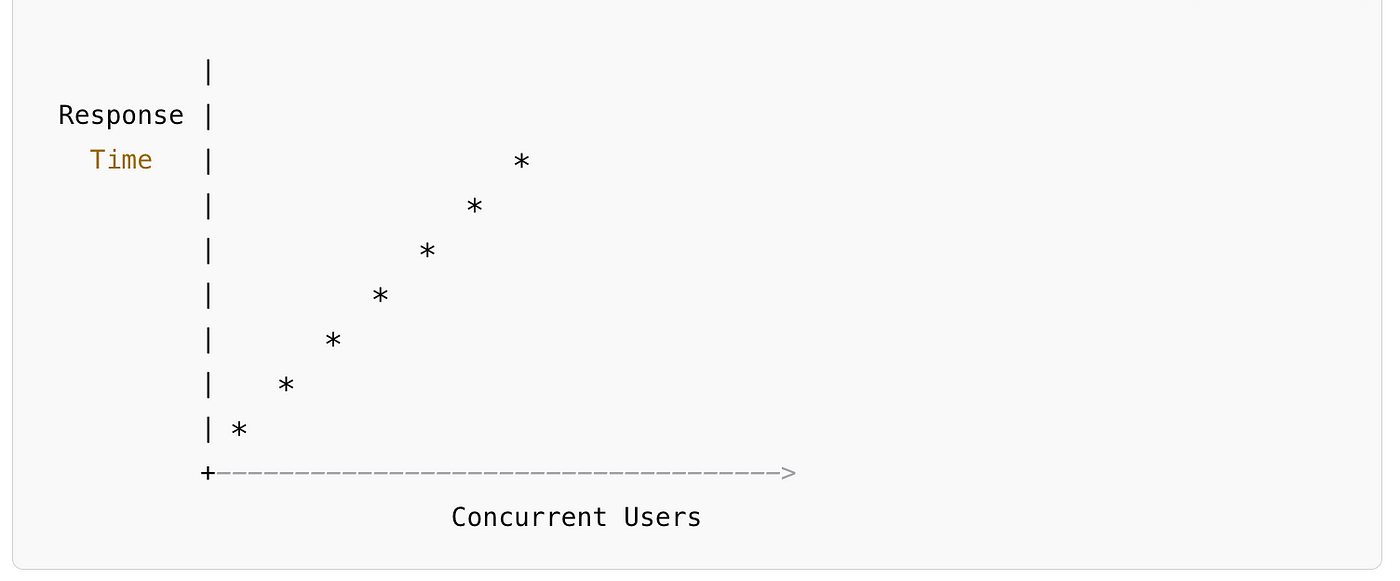
1. Load Testing:
Imagine the graph below representing load testing on an e-commerce site during a sale. The X-axis represents the number of concurrent users, and the Y-axis shows the response time in seconds. As more users are added, the response time increases gradually, but the system remains stable until a critical threshold is reached.
2. Stress Testing:
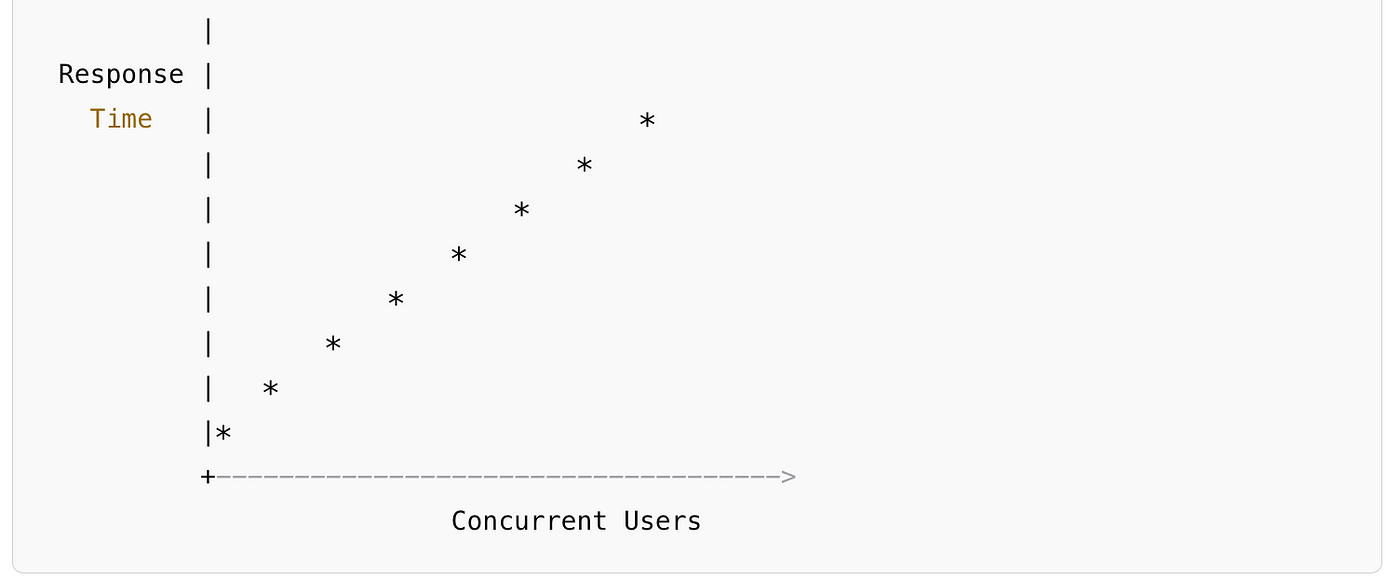
In stress testing, the graph might look like this. The response time increases sharply as the number of users exceeds the system’s capacity, and after reaching a point of failure, the system crashes.
Conclusion
Non-functional testing, particularly performance, load, and stress testing, is essential for ensuring that software applications deliver high performance and reliability. By simulating real-world conditions and stress scenarios, these testing methods help identify bottlenecks, optimize system efficiency, and improve scalability. Ultimately, they enhance the user experience, reduce operational risks, and contribute to the long-term success of software products.
By integrating these tests early in the development lifecycle, companies can ensure they build software that not only meets functional requirements but also performs efficiently under diverse conditions. Non-functional testing isn’t just a luxury — it’s a necessity in the competitive digital world.
 Josh Software