

Simpler requests, smarter responses, and happier devs!
Ever tried building something that seems simple — like showing a user’s profile with posts and likes — and suddenly you’re juggling 5 API calls, 3 loading spinners, and a me breathing down your brain asking:
“Why is it still loading?”
Yeah… same, If you’ve ever felt that pain, you’re gonna like what we’re about to explore. Let’s chat about GraphQL + Rails, and how it can turn your API chaos into clean, focused queries — all through one smart endpoint.
Imagine This…
You’re building something Instagram-ish, and you need to show:
- A user’s name and bio
- Their last 5 posts
- The number of followers
- Recent comments on their posts
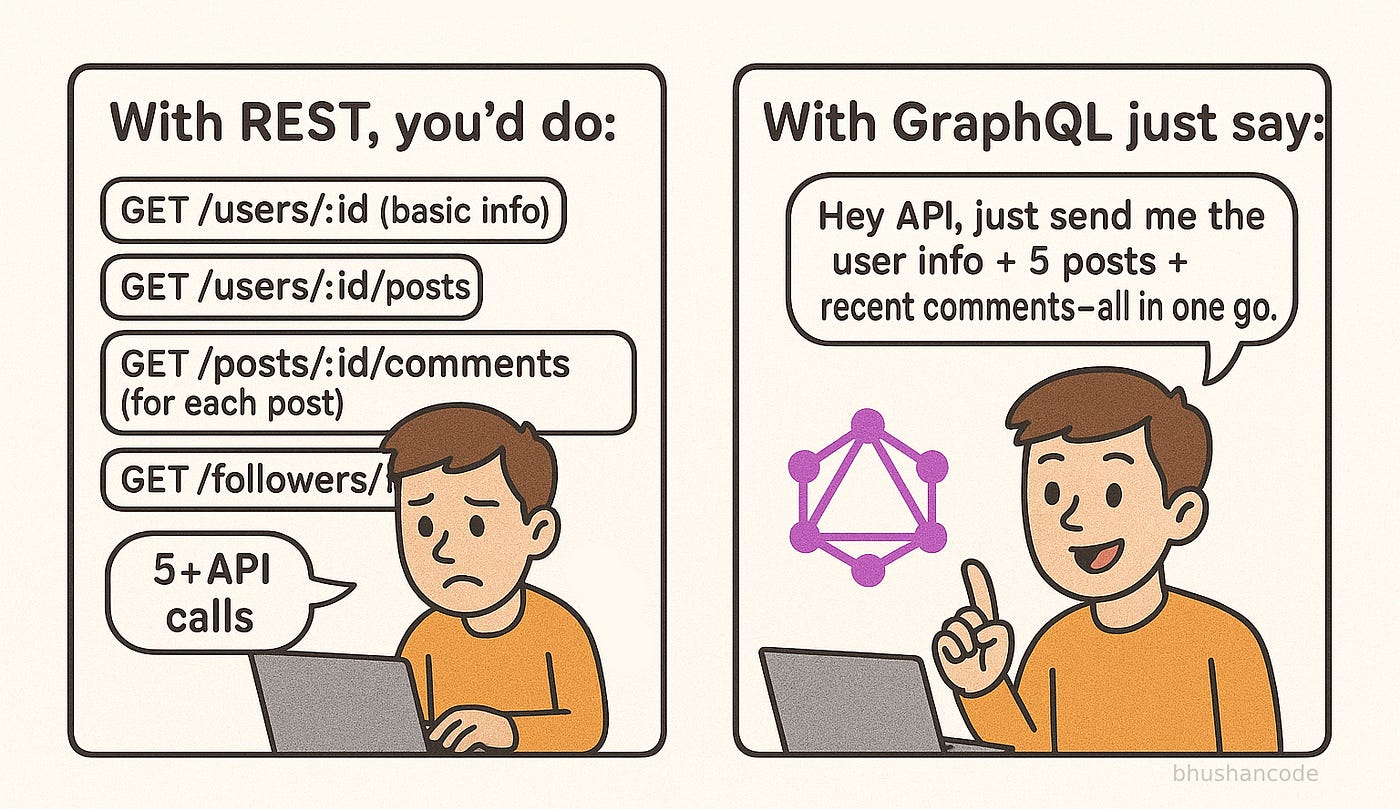
With REST, you’d do:
GET /users/:id            # basic info
GET /users/:id/posts      # user posts
GET /posts/:id/comments   # comments for each post
GET /followers/:id        # follower count
Suddenly, your page needs 4+ API calls just to load!
With GraphQL, you can say:
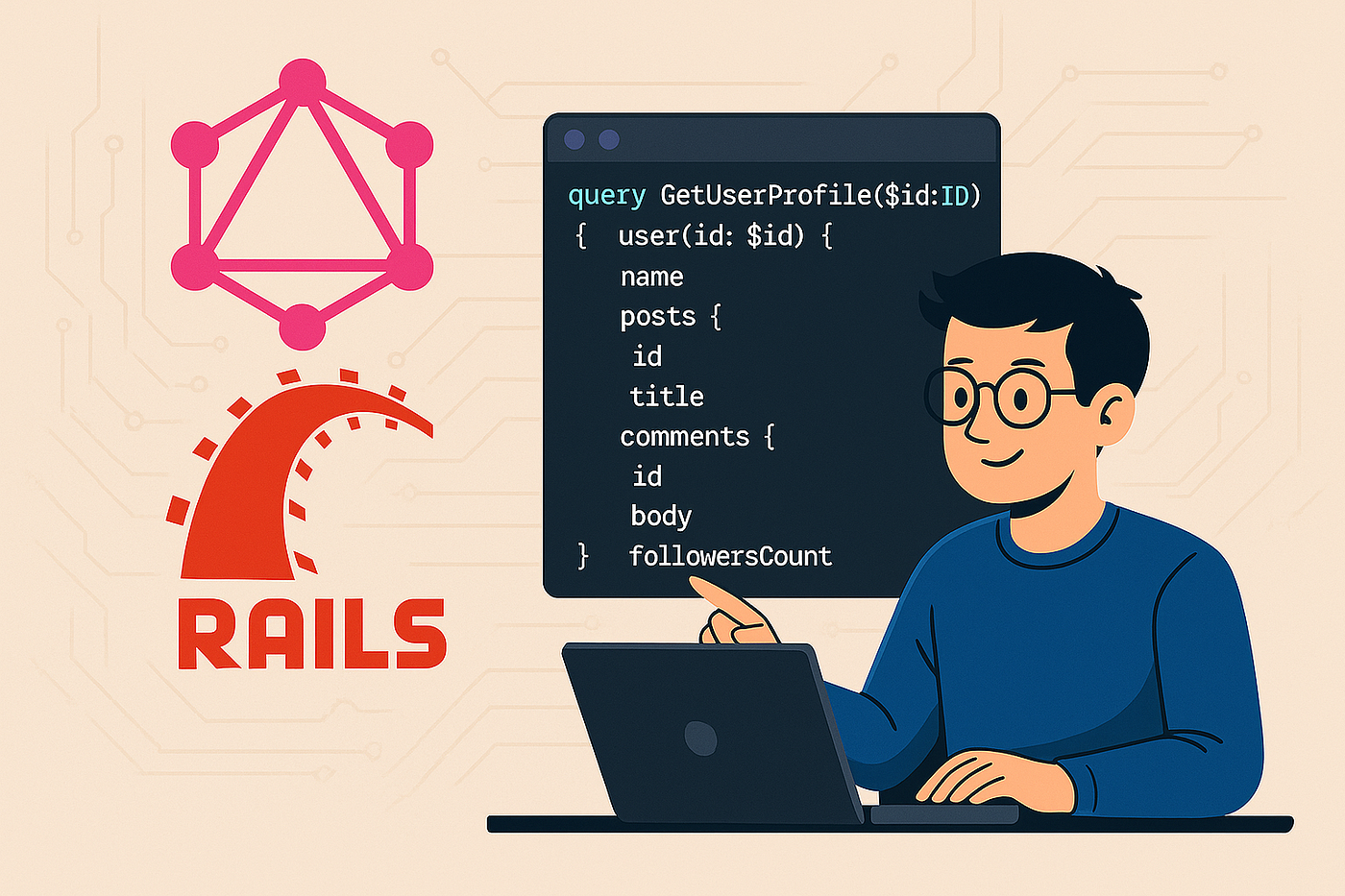
With GraphQL query fetches a user’s profile by their id. It returns:
- the user’s
name - their
posts(with each post’sid,title, and itscomments) - total
followersCount
It’s a nested query that gets user + their posts + comments on posts, all in one request.
query GetUserProfile($id: ID!) {
  user(id: $id) {
    name
    posts{
      id
      title
      comments {
        id
        body
      }
    }
    followersCount
  }
}
That’s the magic of GraphQL: instead of calling multiple endpoints and stitching data together manually, you ask for exactly what you need — and get it in one go.
So, What Is GraphQL?
GraphQL is a query language for your API that gives exactly what you ask for, It’s like a smarter way to talk to your API.
Instead of having a bunch of fixed URLs (like /users, /posts, /comments), you talk just one single endpoint and say:
“Here’s exactly the data I need.”
The backend replies with just that — nothing more, nothing less.
Why I Gave Up on REST (Kind Of)
REST was my go-to for years. It works. But I kept hitting the same walls:
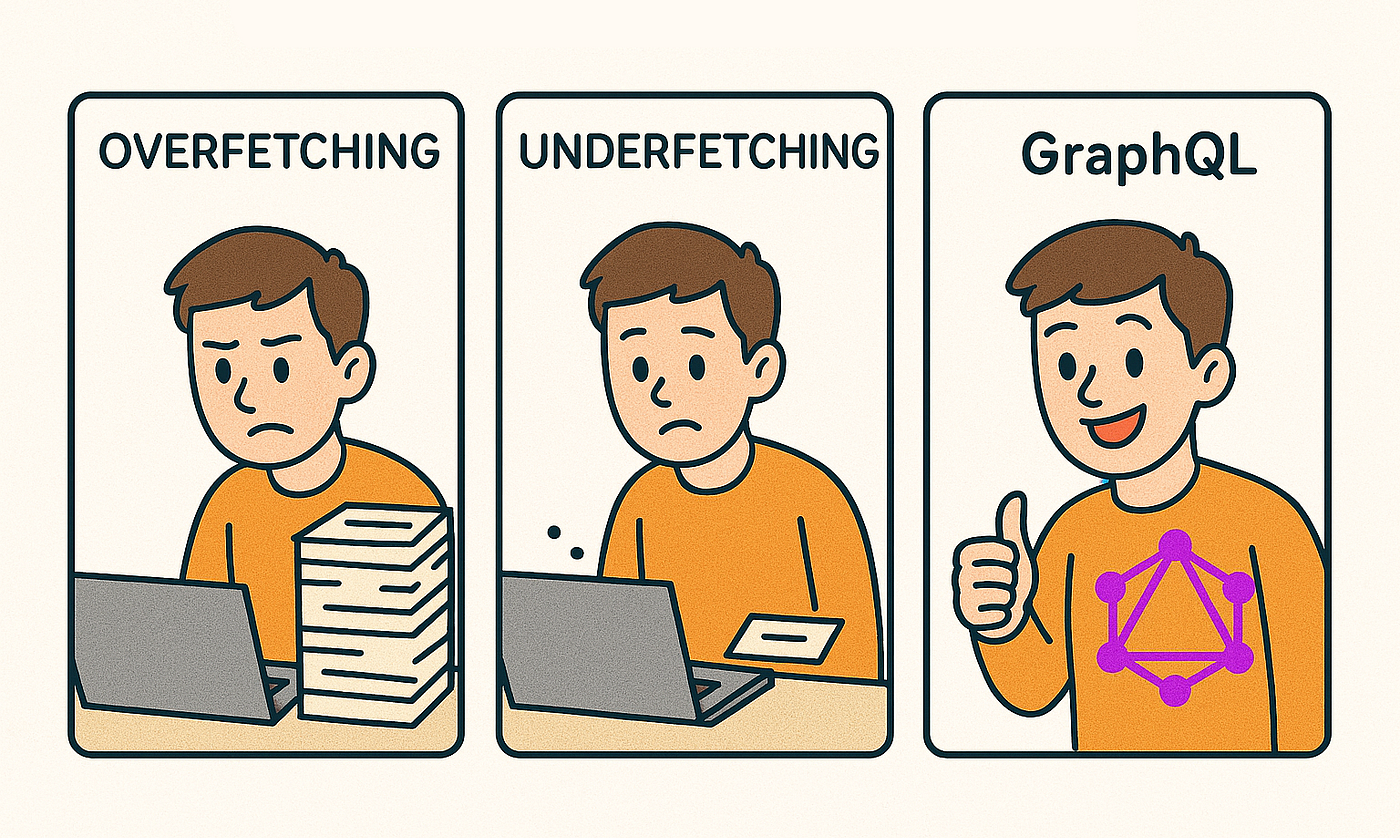
- Overfetching — too much or Underfetching — too little data.
- I had to keep creating new endpoints for every small change.
- And often, frontend work would be stuck waiting for the backend to add “just one more field.”
When I tried GraphQL, things changed:
- Now, the frontend can simply ask for exactly the data it needs, No more over-fetching or under-fetching, No need for a dozen endpoints.
- The backend stays clean, the frontend moves faster, and everyone’s a lot happier — especially me 😄.
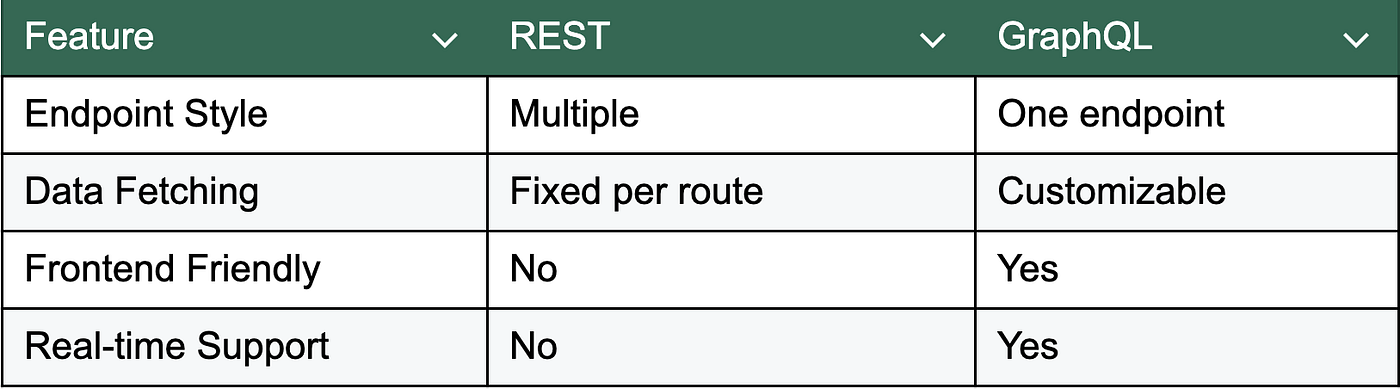
GraphQL vs REST (The Showdown)
Let’s compare them real quick:
Rails + GraphQL = Besties
Here’s why they click:
graphql-rubygem is mature & full-featured- Rails models map neatly to GraphQL types
- Built-in support for batching, authorization, and scopes
- Plays well with RSpec
Setting it up:
# Gemfile
gem 'graphql'
bundle install
rails generate graphql:install
This generates:
/app/graphql/types/: Holds GraphQL type definitions mapping Rails models to GraphQL objects.- Base types, mutation & query files: Define shared logic, data fetches (queries), and data changes (mutations).
- Controller mount at
/graphql: One endpoint to handle all GraphQL requests.
When You Should Use GraphQL
You’ll love GraphQL if:
- Your frontend is in React, Vue, or anything modern
- You’re dealing with deeply linked data (users → posts → comments)
- You’ve got different clients (web, mobile, etc.) needing different data
- You’re tired of adding a new endpoint for every small feature
- You care about clean, maintainable APIs — GraphQL makes this easier by automatically generating a self-documented schema that improves developer experience.
When You Might Not Need It (Yet…)
Skip GraphQL for now if:
- Your app is super basic (just a CRUD app)
- The team’s at capacity — sticking to what works best for now
- You rely heavily on HTTP caching
- Your current REST API works great and you don’t feel the pain (yet)
GraphQL is powerful — but it’s okay to wait if you’re not there yet.
Secured? You Bet.
One sneaky perk of GraphQL? Everything flows through a single /graphql endpoint—like a secret VIP entrance.
Meanwhile, REST feels like guarding a mansion with a dozen doors: /users, /posts, /comments, and oops—did we forget to lock /legacy-v1/data-leak?
GraphQL simplifies this. With just one gate to monitor, you can focus your security measures in one place.
“Fewer access points = fewer chances for mistakes.”
Performance & Optimization
Is GraphQL always faster? Not always — but often:
- Fewer network requests
- Smaller, tailored responses
- Less bandwidth waste
Real Comparison
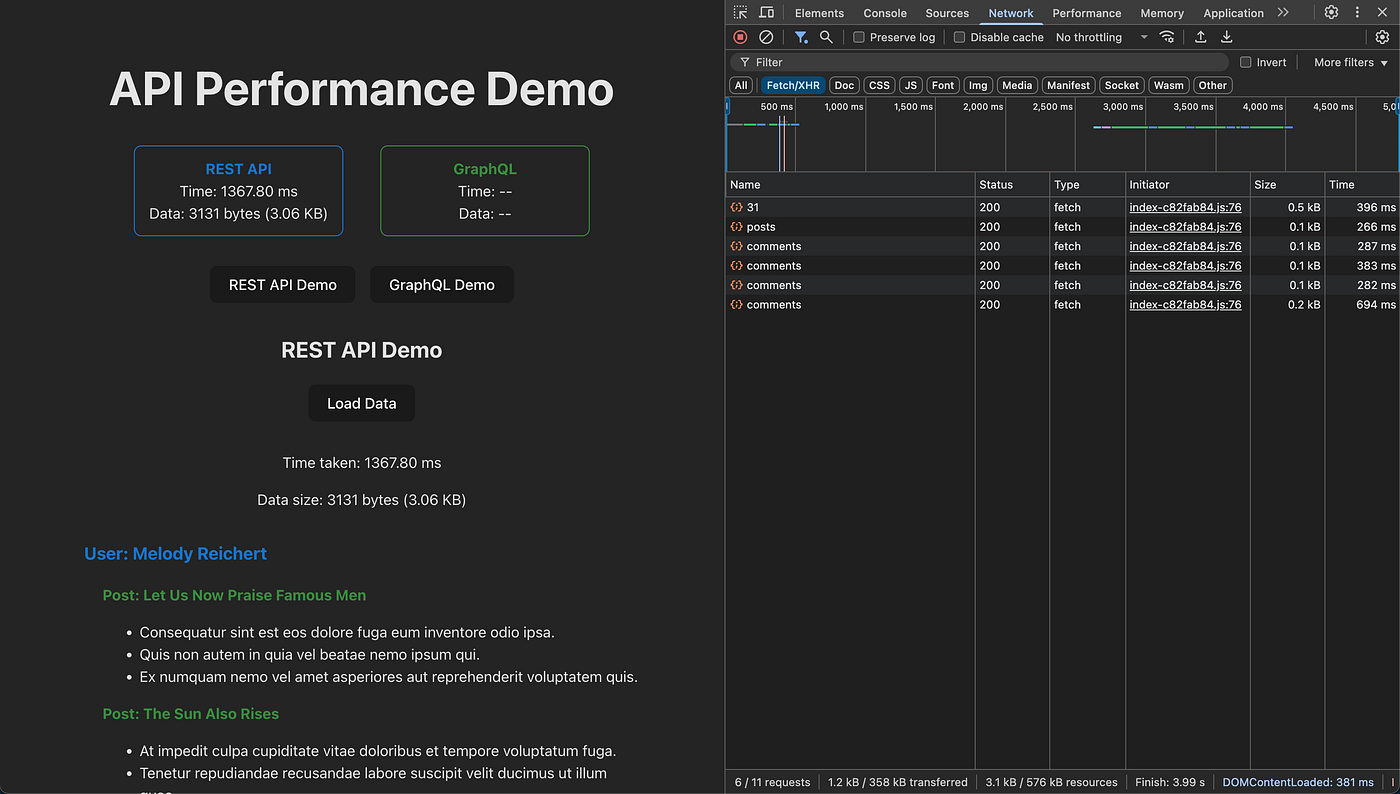
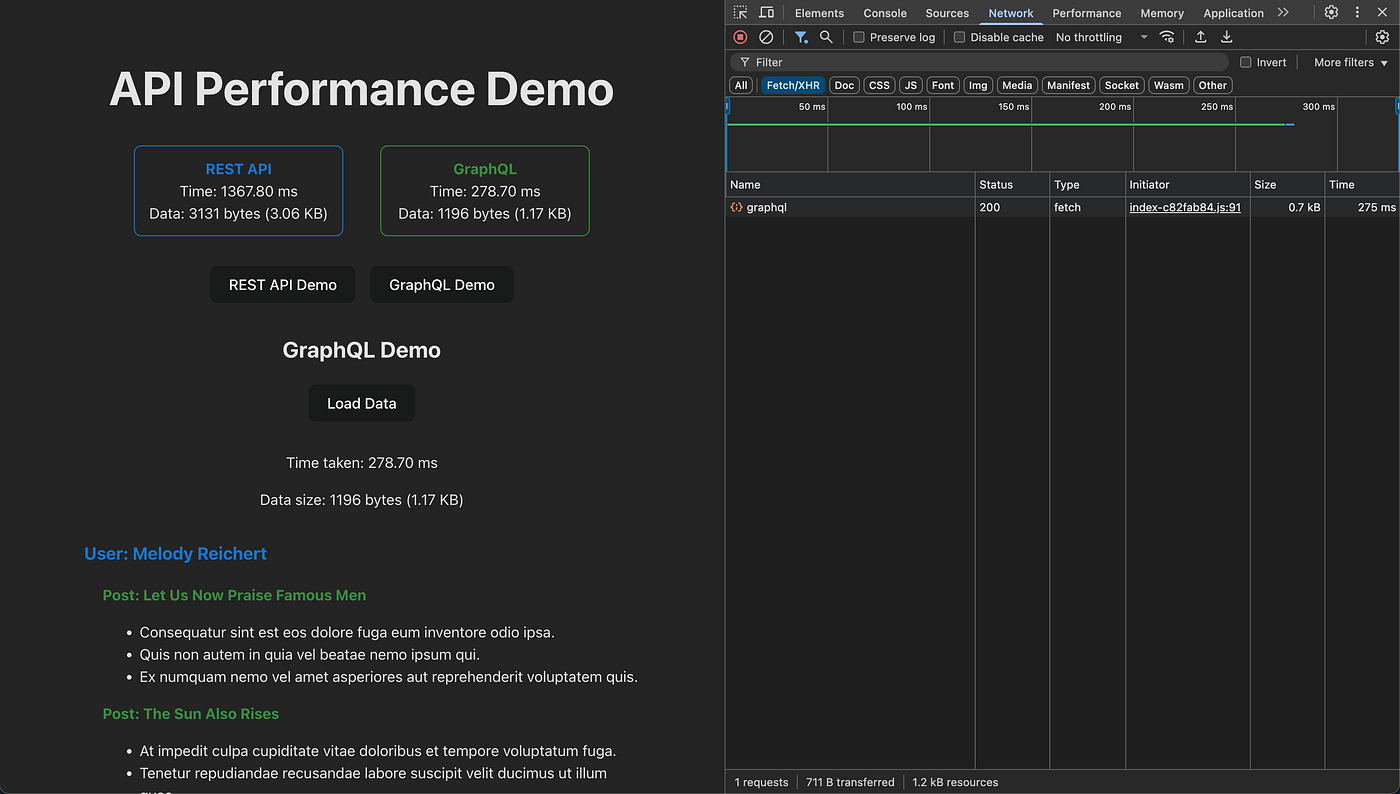
I built a little app using Rails and React, where the backend serves both REST APIs and GraphQL — because why not let them compete a bit? 😄 On the frontend, React fetches data using both methods and shows a live comparison of how much data gets fetched and how long it takes.
Spoiler alert: REST brings way too much to the party (hello overfetching!), while GraphQL shows up with just what you asked for — no more, no less. I’ve attached screenshots from the network tab too, in case you want to see REST sweating a little.
Try It Out
- Code: Frontend and Backend
- Live Demo: https://graphql-frontend-d7xj.vercel.app/
Real Talk: GraphQL Isn’t Magic
Let’s be real:
- It has a learning curve (types, schemas, resolvers — they’re new concepts)
- Caching is trickier than REST
- You need good security practices (like field-level auth)
- Bad queries can hurt performance if not controlled
Still — once you get the hang of it, you won’t want to go back.
Final Thoughts
GraphQL won’t solve everything, but if you’re:
- Tired of chasing REST endpoints
- Sick of waiting for backend tweaks
- Building modern frontends that want exactly the right data…
Then it’s worth a trying, your APIs become cleaner, smarter, and honestly — more fun to work with.
Working on a follow-up blog next — we’ll dive into the real stuff:
- Full Rails + GraphQL setup
- Config and schema
- Test cases with RSpec
Stay tuned. for : One endpoint to rule them all. And maybe your sanity too.
 Josh Software